

Essential Precautions for Babies and Children in Hot Weather in Tenerife
Tenerife enjoys a sunny and pleasant climate for much of the year, but the intense summer heat (and sometimes outside peak season) requires extra caution with little ones. Babies and young children dehydrate much faster than adults: their bodies generate more heat, sweat less efficiently, and have limited water reserves. Here are the key precautions to take at the beach, by the pool, during outings, and in the car to keep them safe.
1. Hydration: the absolute priority
- Offer water regularly, even if they don’t ask. For breastfed babies, increase the frequency of feeds. For bottle-fed babies, offer water (in addition to milk) when it’s very hot, following your paediatrician’s advice.
- Always carry fresh water (ideally in insulated bottles or in a cooler). Children over one year old can also drink naturally flavoured water (lemon, cucumber) or light broths if needed.
- Avoid sugary juices and sodas in large amounts: they don’t hydrate as effectively and can worsen dehydration.
- Watch for warning signs: dry lips, fewer wet nappies, sunken fontanelle in infants, unusual irritability, excessive sleepiness, or dark urine. If in doubt, seek medical advice quickly.
2. Appropriate clothing
- Choose light, loose, and breathable fabrics (cotton, linen). Light colours reflect heat better.
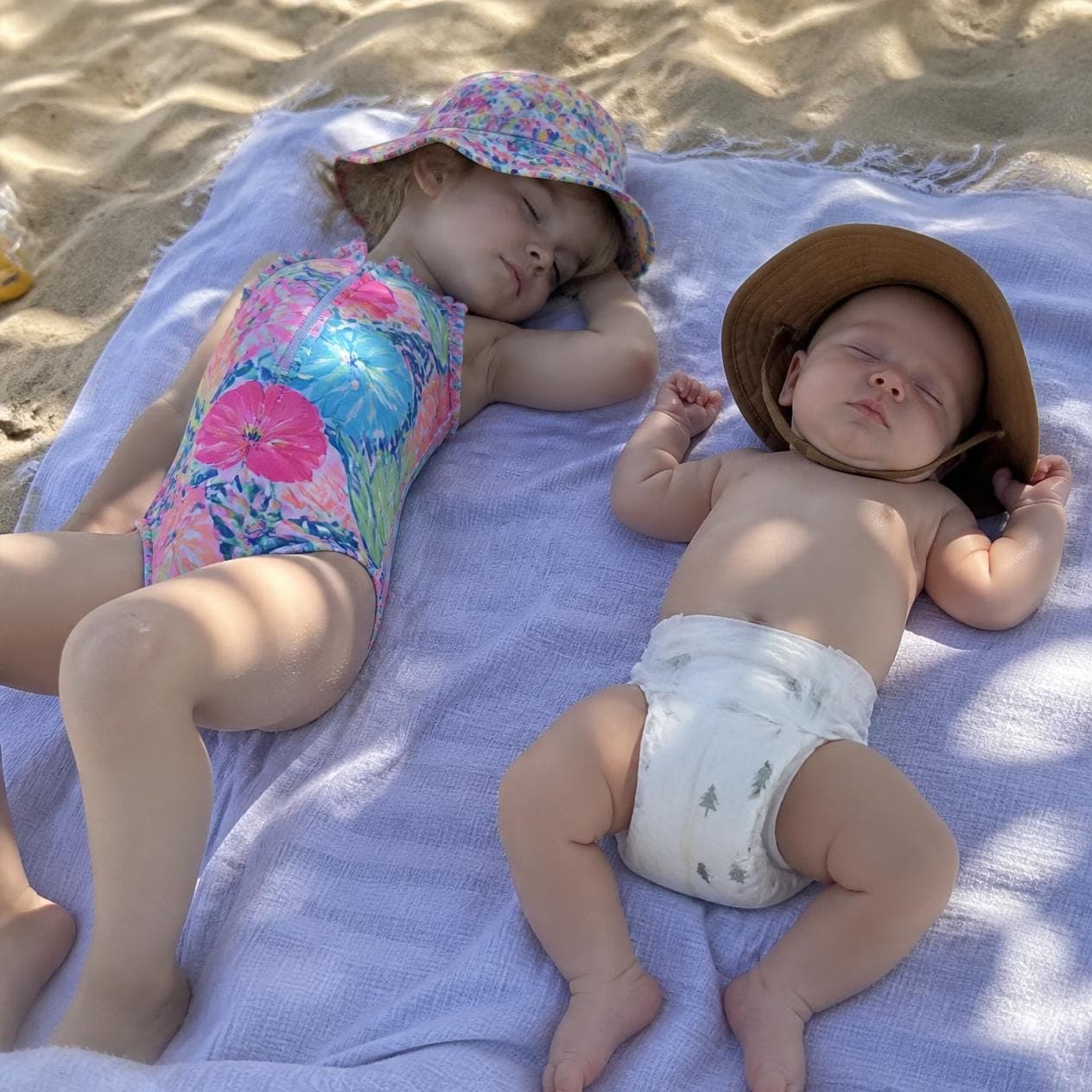
- A wide-brimmed hat or a cap with neck protection + suitable sunglasses from a young age.
- At the beach and pool: UV-protective swimwear (UPF 50+) with long sleeves and legs for babies and young children. These protect better than sunscreen alone and remain effective when wet.
- Avoid tight or synthetic clothes that hinder sweating.
3. Protection at the beach and pool
- Avoid the hottest hours (generally 11 am – 4 pm). Prefer early morning or late afternoon.
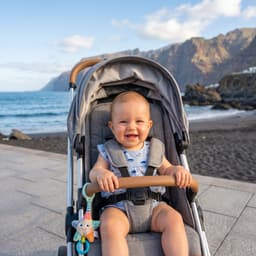
- Always stay in the shade (parasol, beach tent, trees). Even in the shade, reflection from sand or water increases exposure.
- High-protection sunscreen (SPF 50+) suitable for babies (usually from 6 months), applied generously and reapplied every 2 hours and after every swim. For under-6-month-olds, prioritise clothing and shade.
- Supervise constantly: a child can burn or dehydrate very quickly. Limit time in direct sun.
- After swimming, rinse with fresh water, dry skin folds thoroughly, and moisturise the skin.
4. Car journeys
- Never leave a child (even for a few minutes) in a parked car, even in the shade or with windows slightly open. Interior temperatures rise extremely fast.
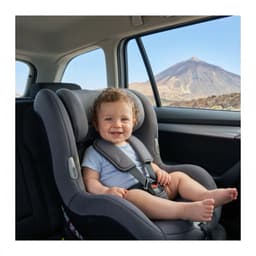
- Before setting off, air out the vehicle thoroughly and use the air conditioning. Check that car seats and straps are not burning hot.
- Keep water easily accessible and offer it regularly during the trip.
- Dress lightly in the air-conditioned car to avoid thermal shock when getting out.
- On longer journeys, take frequent shade breaks to drink and stretch.
5. Other everyday protective measures
- Plan activities (walks, visits) during the cooler parts of the day.
- Use a pure-water spray mist to cool the face and limbs (without overdoing it to avoid sudden chilling).
- Keep living areas well ventilated or air-conditioned, but avoid strong cold drafts directly on the baby.
- Pay special attention to active children at play: they often don’t feel thirst in time.
- During prolonged heatwaves, reduce outings and increase quiet time in the shade or indoors.
These simple measures make a big difference. Tenerife remains a wonderful family destination when you adapt to the climate.
Stay attentive, hydrate often, protect from the sun, and your holiday will be full of happy memories. If you have any concerns about your child’s condition, don’t hesitate to contact a doctor or local emergency services.